
How depression can differ by age and gender, from reproductive transitions to late-life cognitive symptoms, screening, and safety.
Topics
Anticonvulsants Beyond Epilepsy: Uses, Mechanisms, Cautions
How anticonvulsants work, their approved uses beyond epilepsy, and key safety issues: HLA-B*1502, valproate in pregnancy, interactions and monitoring.
Urinary Tract Infections: How Treatment Has Evolved
How UTI testing, antibiotic choices, OTC relief, resistance, and warning signs shape modern urinary tract infection treatment.
Postoperative Pain Management: Current Trends
How multimodal analgesia, nerve blocks, ERAS, and opioid-sparing care are changing postoperative pain management and recovery.
Respiratory Tract Infections: Treatment and Antibiotics
How respiratory infections are treated, when antibiotics help, what eases symptoms, and which warning signs need medical care.
CME review
Neuropathic Pain Mechanisms: Diagnosis and Treatment
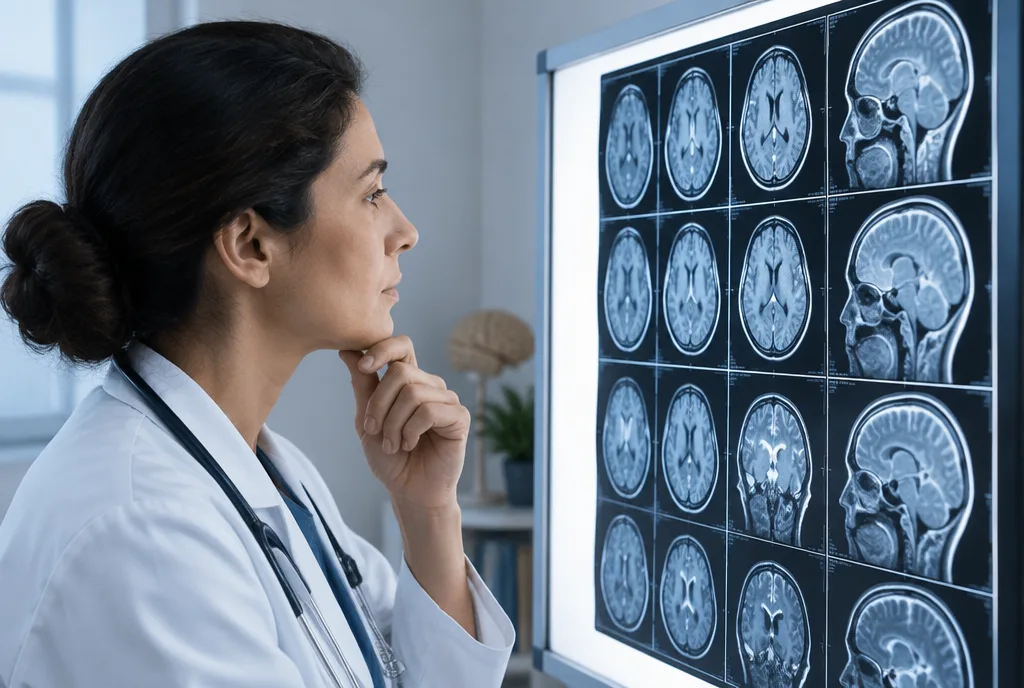
Neuropathic pain mechanisms explain why pain can persist, burn, tingle, or appear without any new injury to skin or muscle. Neuropathic pain is pain caused by a lesion or disease of the somatosensory nervous system: the signaling system itself becomes abnormally excitable, and the signal can be amplified on its way from a damaged peripheral nerve to the spinal cord and brain.
Neuropathic pain is a clinical description, not a diagnosis
The International Association for the Study of Pain (IASP) defines neuropathic pain as pain caused by a lesion or disease of the somatosensory nervous system. That wording matters. Meeting the definition requires evidence of a lesion or disease affecting that system; a pain quality alone does not establish the condition. Estimated prevalence in the general population is 6.9% to 10%.
Nociceptive pain is the protective alarm produced by tissue damage. Neuropathic pain differs from it, and from inflammatory pain, because it arises from altered neural signaling. Maladaptive plasticity changes how signals are generated, relayed, and restrained, which is central to chronic pain mechanisms. Spontaneous pain and paresthesia can reflect this altered processing, but assessment must connect symptoms to the underlying nervous-system problem.
Altered pain transmission can begin at an injured nerve
In the normal pain transmission mechanism, a noxious event activates nociceptor endings, and afferent signals travel toward the spinal cord. After nerve injury, the excitability of those endings rises through peripheral sensitization. Contributors include inflammatory mediators, ion-channel changes, and neuro-immune-cutaneous interactions.
Injured nerves can also produce ectopic discharges: action potentials that arise away from the nociceptor endings. These signals may start at the lesion, in the dorsal root ganglion, or along demyelinated sections of the axon. Ectopic activity is one of the central mechanisms behind spontaneous pain and paresthesia.
Ion channels can lower the threshold for abnormal firing
The voltage-gated sodium channels Nav1.7, Nav1.8, and Nav1.3 are major drivers of pathological neuronal hyperexcitability. Nav1.7 acts as a threshold channel that helps govern action-potential generation, and gain-of-function mutations in it cause inherited pain syndromes. Nav1.8 is upregulated in injured nociceptors and contributes to ectopic firing. Nav1.3 is normally expressed only at low levels in adult dorsal root ganglia but is strongly upregulated after nerve injury.
Central sensitization turns ordinary input into a larger response
In central sensitization, nociceptive neurons in the central nervous system respond more strongly to normal or subthreshold afferent input. This form of use-dependent synaptic plasticity is a major mechanism in both neuropathic and inflammatory pain states. Functional and molecular imaging provide converging evidence that it occurs in humans and is clinically relevant.
After peripheral nerve injury, structural and functional changes in neuronal and non-neuronal cells can progress from peripheral to central sensitization. As a result, pain intensity or distribution may not map neatly onto a single moment of tissue damage.
Loss of inhibition removes a spinal brake
Peripheral nerve injury is associated with a selective loss of GABAergic inhibition in the superficial laminae I to III of the spinal dorsal horn. Reduced GABAergic and glycinergic tone increases NMDA-receptor activity on primary afferents and reinforces spinal hyperexcitability. GABA tone can fall through loss of GABAergic interneurons, and reduced expression of glutamate decarboxylase can lower it even without neuronal cell death. When this inhibitory control weakens, pain can intensify.
Common conditions show why mechanism and cause must be separated
| Condition | Key facts |
|---|---|
| Diabetic peripheral neuropathy | The most common cause of neuropathy worldwide. Reported prevalence of peripheral neuropathy in diabetes ranges from 6% to 51%, depending on age, diabetes duration, and glycemic control; about one third of people with diabetes in the community have painful neuropathy symptoms. |
| Postherpetic neuralgia | The most common long-term complication of herpes zoster: unilateral dermatomal shooting or burning pain lasting 3 months or longer after zoster onset. About 13% of people aged 50 or older with zoster develop it. |
| Radiculopathy | Most often caused by mechanical compression of a nerve root, usually from disc herniation. Lumbosacral radiculopathy affects about 3% to 5% of the population. |
The aim of assessment is not to infer a cause from one descriptor. It is to determine whether a somatosensory lesion or disease is present and which mechanisms may dominate.
Screening tools organize symptoms but do not replace assessment
Questionnaires add structure to the history and sensory examination and can identify a neuropathic pain component.
- DN4: 10 items, including 7 pain-description items and 3 sensory-examination items. A cut-off of 4 out of 10 showed 82.9% sensitivity and 89.9% specificity.
- LANSS and S-LANSS: LANSS includes 5 symptom items and 2 examination items; a score of 12 or more suggests predominantly neuropathic pain. S-LANSS is a 7-item self-report version without examination.
- painDETECT: 9 items covering sensory descriptors plus spatial and temporal pain features. A score of 19 or more suggests likely neuropathic pain.
Persistent, severe, or unexplained pain calls for medical assessment rather than self-diagnosis with a questionnaire.
A mechanism-based approach links phenotype to treatment choices
A mechanism-based approach tries to correlate clinical pain phenotypes, such as irritative or deafferentation sensory profiles, with specific pathomechanisms and to select treatment accordingly. Grouping patients by pain-related sensory abnormalities is a first step toward stratified care. Studies that cluster patients by sensory subtype and target treatment have shown encouraging results, although clinical applicability is still limited.
Despite available therapies, only 30% to 40% of people with neuropathic pain achieve acceptable pain reduction, and a mechanism-based approach could improve this rate. It also corrects an oversimplified view of chronic pain mechanisms: one diagnostic label may cover ectopic firing, peripheral sensitization, impaired spinal inhibition, central sensitization, or several of these at once.
Drug classes address different parts of the system
The 2025 NeuPSIG guideline recommends gabapentinoids and SNRIs as first-line options for peripheral neuropathic pain, and tricyclic antidepressants are also among the established first-line drugs. Gabapentin and pregabalin bind the α2δ subunit of voltage-gated calcium channels and reduce excitatory neurotransmitter release. The SNRI group includes duloxetine and venlafaxine; amitriptyline and nortriptyline are tricyclic antidepressants. Any choice requires an individualized clinical decision; this overview does not provide a treatment plan or dosing instructions.
Topical options are particularly relevant for localized peripheral pain. In postherpetic neuralgia, lidocaine 5% patches are a second-line option but may become first-line in frail or older patients or when systemic medicines are contraindicated. Capsaicin 8% patches can be effective in diabetic peripheral neuropathy and postherpetic neuralgia; NeuPSIG 2025 recommends them for localized peripheral neuropathic pain that can be covered with the permitted number of patches. Topical therapies act on the peripheral neuro-immune-cutaneous environment while minimizing systemic adverse effects.
Three misconceptions obscure the mechanisms of pain
Neuropathic pain is not simply severe nociceptive pain
Nociceptive pain is an alarm associated with tissue damage. Neuropathic pain requires a lesion or disease of the somatosensory system and involves altered neural signaling and plasticity.
A screening score does not prove the diagnosis
DN4, LANSS, S-LANSS, and painDETECT can identify a neuropathic component, but they cannot establish the required lesion or disease on their own.
One mechanism does not explain every symptom
A single presentation may involve peripheral hyperexcitability, ectopic discharges, reduced inhibition, central sensitization, or overlapping processes. That is the rationale for mechanism-based, multimodal care rather than a one-size-fits-all approach.
Frequently Asked Questions
What are the main neuropathic pain mechanisms?
The key mechanisms are peripheral sensitization, ectopic discharges from injured nerves, sodium-channel-related hyperexcitability, central sensitization, and reduced GABAergic or glycinergic inhibition in the spinal cord.
How do afferent and efferent pain pathways differ?
Afferent pathways carry sensory input toward the central nervous system; efferent pathways carry signals away from it. Neuropathic pain mechanisms center on injury to somatosensory afferents and the spinal processing of their input.
What is the mechanism of acute pain compared with neuropathic pain?
Acute nociceptive pain is a protective alarm associated with tissue damage. Neuropathic pain is caused by a lesion or disease of the somatosensory nervous system and can persist through maladaptive neural plasticity.
Can painDETECT or DN4 diagnose neuropathic pain?
No. These tools help screen for a neuropathic pain component. Diagnosis requires clinical assessment and evidence of a relevant lesion or disease.
When should pain be assessed by a clinician?
Persistent, severe, or unexplained pain warrants medical assessment. Persistent shooting or burning pain after shingles should also be evaluated.
Information, not a course credit
The reviews on CME-CE are independent summaries for self-study. They are not accredited activities and do not replace clinical guidelines or your own judgement.